I’ve been reading David Pogue’s
While cleaning out some old folders on my laptop, I came across an illustration I made almost seven years ago. A pirate flag from our company’s early days, back when Terzo was called Curemint (that’s a story for another time).
The timing was perfect.
Pogue’s story reminded me of when Apple was growing fast, but a small team inside still worked like a startup. Scrappy, independent, and a little impatient. It made me think about what we’re doing at Terzo now.
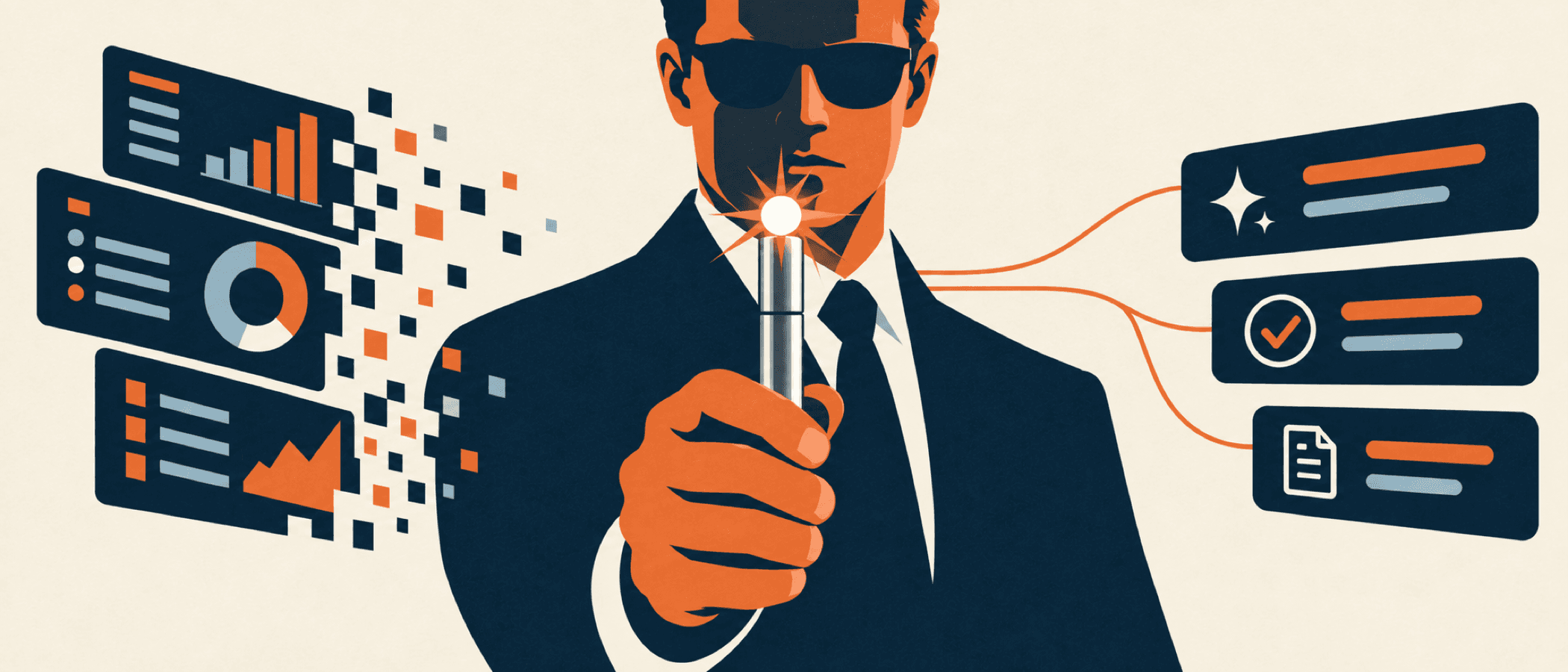
We’re reconsidering how people use enterprise software now that AI is front and center. For years, users had to dig through dashboards, menus, filters, and reports to find what they needed. Today, people expect things to work differently. They want information delivered to them, customized to their role and tasks. They want to ask a question and get a clear answer fast, create a brief for leadership, and let agents manage repetitive work so they can focus on decisions that need their judgment.
This shift is about more than just adding AI to an old product. It means questioning how enterprise software has always worked and completely rethinking what it can be based on what people actually want.
In many ways, it seems as if we’re raising the pirate flag again.
The Macintosh pirates
In the early 1980s, the Apple II was driving most of Apple’s success. But Jobs believed the future of personal computing needed to look and feel completely different.
The Macintosh team moved into a separate building called Bandley 3. Jobs described them as pirates inside a growing company. Programmer Steve Capps made a black pirate flag, and Susan Kare painted the skull and crossbones, using the rainbow Apple logo as an eye patch. They flew the flag over the building.
The flag wasn’t just a joke. It gave the team permission to question assumptions, move fast, and build something new. They were still part of Apple, but they worked with the speed of a startup.
That idea stuck with me. The Macintosh team didn’t focus on improving the Apple II. They didn’t ask, “How do we make the existing thing better?” Instead, they asked, “What should this become?”
There was a bigger idea behind that flag. Back then, computers were made for big companies and institutions. They were expensive, complicated, and out of reach for most people. Jobs wanted to change that. The Macintosh was meant to be a computer for everyone. Something anyone could sit down and use.
That’s the same question, and really the same mission that’s driving everything we do at Terzo today. How do we take these ugly, monolithic applications and deliver a more user-friendly, humanized consumer experience to the enterprise?
Our first pirate flag
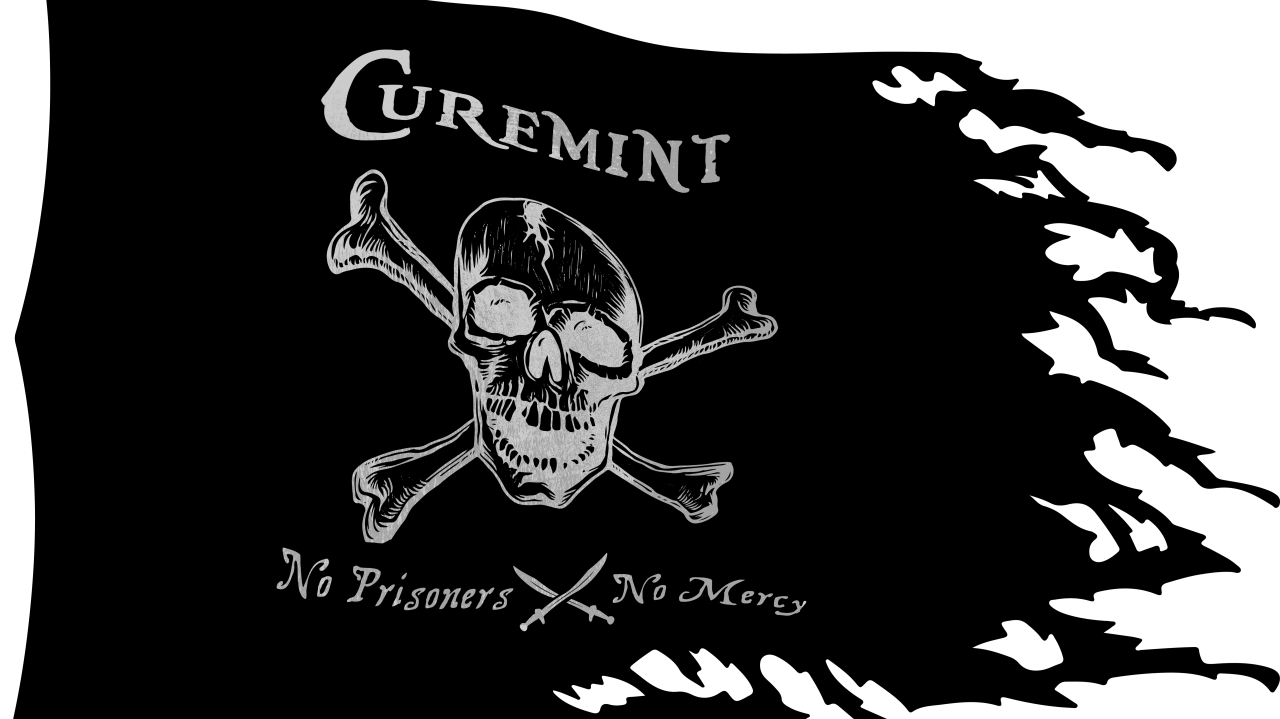
When I designed that flag, Curemint was just a handful of people. We had limited resources, big ideas, and a strong belief that enterprise software could be better. We experimented constantly, built quickly, and changed direction as soon as something didn’t work.
Seven years later, we've grown up. Bigger company, bigger customers, more experience, and a lot of hard-won lessons behind us. But that startup mindset still matters, maybe more now than it ever did. Technology moves fast, customer expectations keep changing, and the workflows that made sense a few years ago might not be what people want next year.
It’s easy for a growing company to stick with what already exists. But startup thinking pushes you to ask what should exist instead.
Enterprise software has put too much work on the user
For decades, enterprise software has run on a simple bargain: the system stores the information, and you find it.
You open a dashboard, search through menus, apply filters, open several records, export a spreadsheet, compare it with other systems, and finally turn it all into a summary for someone else. The answer might be there, but you still have to dig it out, make sense of it, and turn it into a decision.
We’ve spent years making that model better with improved navigation, cleaner dashboards, and faster search. These changes help, but they still expect the user to do most of the work.
AI changes that. Now, software can highlight what matters before you even start searching. It can understand your context and role, explain why something needs your attention, and draft the first version of the brief you were planning to write. It can also assign repetitive tasks to agents and bring the results back for you to review.
The goal isn’t to make people better at using software. It’s to help them spend less time navigating it.
Rethinking the Terzo experience
There’s a similar gap in enterprise software today. We use beautifully designed apps on our phones and tablets, so intuitive that no one needs a manual. But at work, when we open our software, it feels like it was built for the org chart, not for the person using it. It’s clunky, awkward, and somehow still the norm. That contrast stands out, and closing it is a big part of what we’re working on at Terzo: bringing the experience people expect from consumer apps into enterprise software.
At Terzo, we help companies make sense of their contracts, suppliers, spending, and obligations. This information is often scattered across contracts, purchase orders, invoices, spreadsheets, emails, and different business systems. Even after gathering it, someone still has to figure out what it means: which renewal needs attention, where spending is over contract terms, which obligation was missed, and what an executive really needs to know.
Traditional software tries to answer those questions with more screens, more tables, and more exports. We want to solve them differently.
Instead of making someone dig through a repository, the system brings up the contracts that need attention. Rather than having them compare spending by hand, it flags unusual patterns and explains the likely impact. And instead of leaving them to put together an executive update late at night, it drafts a brief with context, evidence, and a recommended next step.
This isn’t about taking people out of the process. It’s about giving them back the hours they used to spend searching and assembling, so they can focus on what really needs a human touch: judgment, strategy, and building relationships.
Staying scrappy as you grow
We often think of scrappiness as something for small teams with small budgets, where everyone does a bit of everything. But scrappiness isn’t about size. It’s about being willing to test an idea before spending months on it, having the humility to admit when a workflow isn’t right anymore, and the fortitude to challenge your own product before someone else does.
Growing companies need structure. Enterprise customers expect reliability, security, and trust, and those things can’t be taken lightly. But structure shouldn’t keep you from experimenting. challenge is balancing both: the discipline of an established company and the immediacy of a startup. That’s what the Macintosh team managed at Apple. At Terzo, we’re working to do the same by testing new ways for information to surface, exploring interfaces that respond to context rather than forcing everyone down the same path, and figuring out when someone needs a dashboard, a direct answer, or an agent to handle the task.
Some things will work, and some won’t. That’s the point.
Raising the flag again
Finding that old Curemint flag reminded me who we were at the start. A small team trying to build something different. A lot has changed since then: the name, the team, the customers, and the size of the problems we’re trusted to solve. The technology changed faster than any of us expected. But the mindset still holds up. We shouldn’t have to search through a system to find what matters. The system should bring it to them. They shouldn’t spend hours assembling updates from scattered sources or keep repeating tedious work just because that’s how it’s always been done.
AI alone isn’t the answer. It can search, connect, summarize, recommend, and act, but truly rethinking the experience around what people need takes a real change in mindset, not just a new feature. The best AI experiences are the ones you barely notice. The AI works in the background, and what stands out is faster answers, clearer context, and less busywork, not the technology itself.
This is the real opportunity. The number of AI features won’t define the companies that lead this shift. What will matter is their readiness to challenge how their products work and redesign them with people at the center.
Sometimes, even seven years in, you have to raise the flag again.
Sometimes you have to become pirates again.